
What is gas insulated switchgear high voltage products?
-
Gas insulated switchgear high voltage products overview with benefits, comparison, checklist, and application scenarios for reliable system selection.


Gas insulated switchgear high voltage products definition and core concept
gas insulated switchgear high voltage products refer to compact electrical switchgear systems that use insulating gas to isolate and protect high voltage components. These systems typically operate in medium to high voltage ranges and integrate circuit breakers, disconnectors, and protection devices within sealed enclosures. Engineers use gas insulation to achieve higher dielectric strength compared with air insulated systems. This structure reduces equipment size while improving reliability. Industrial facilities and substations often adopt this technology where space and safety matter. Understanding the concept helps project teams evaluate whether this solution fits specific power distribution needs.
What problem do gas insulated switchgear high voltage products solve
Traditional air insulated switchgear often requires large installation space and strict environmental control. Industrial projects located in urban or underground environments face space limitations. Dust, humidity, and pollution may also reduce insulation performance in open air systems. Maintenance requirements increase when external conditions affect exposed components. These challenges create operational risks and higher lifecycle costs. Engineers therefore require a solution that improves insulation stability while reducing footprint. Gas insulated systems address these issues through sealed design and controlled internal environments.
Why gas insulation improves switchgear performance
Gas insulation provides higher dielectric strength than air, allowing components to be placed closer together safely. Manufacturers commonly use SF6 or alternative gases to maintain stable insulation performance. The sealed enclosure protects internal components from moisture, dust, and contaminants. Reduced exposure improves long term reliability and minimizes maintenance frequency. Compact structure also allows installation in confined spaces such as urban substations. Engineers benefit from predictable insulation performance under varying environmental conditions. This advantage explains why gas insulated switchgear becomes popular in modern infrastructure projects.
How gas insulated switchgear high voltage products work in practice
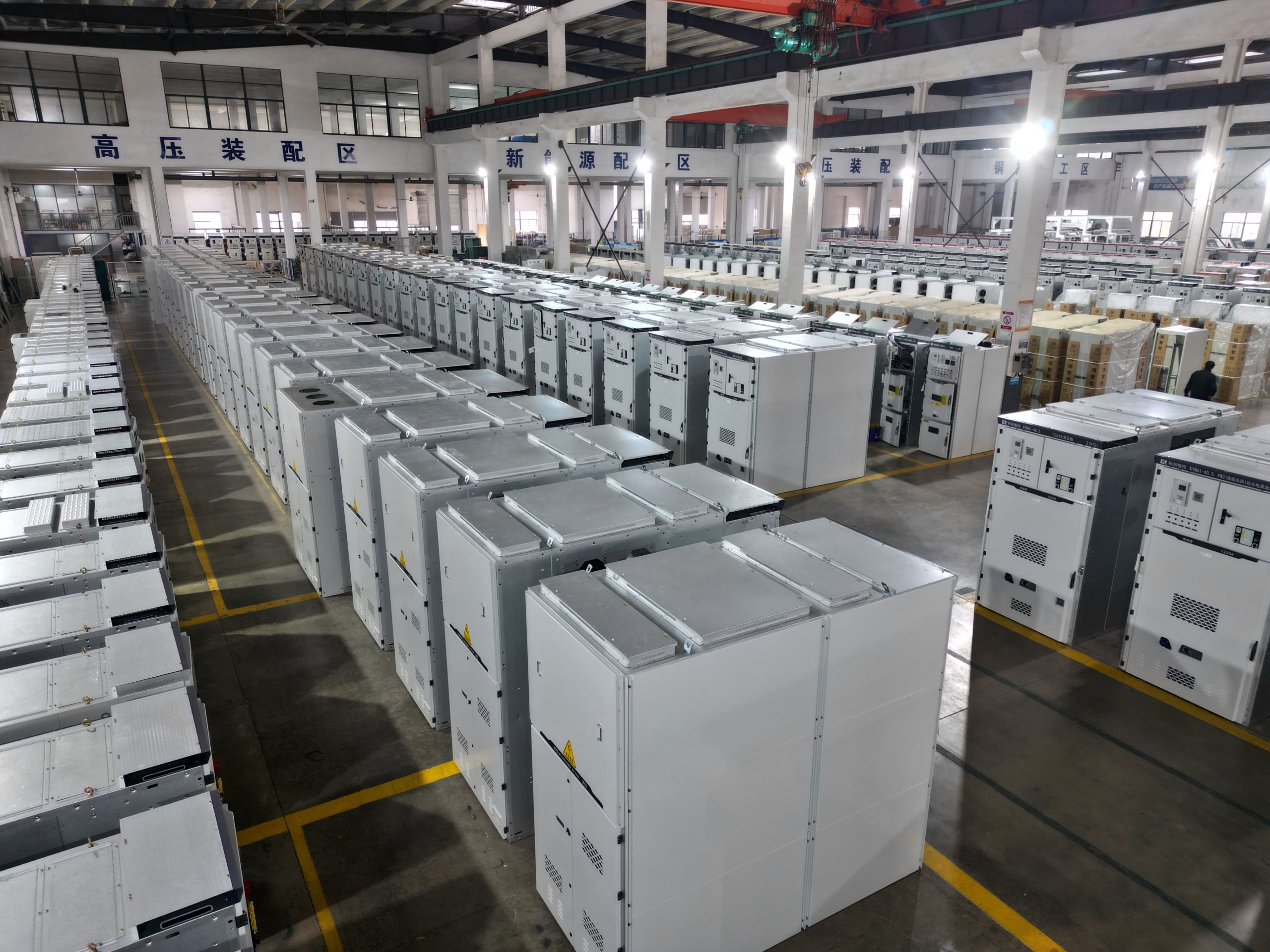
Gas insulated switchgear systems enclose all live components within sealed metal compartments filled with insulating gas, ensuring stable insulation performance in demanding environments. High voltage switchgear plays a critical role in controlling, protecting, and isolating electrical equipment within these systems. Circuit breakers interrupt current flow during fault conditions, while disconnectors provide reliable isolation for maintenance operations. Protection relays continuously monitor system status and automatically trigger switching actions when abnormalities occur. The sealed design maintains consistent insulation quality regardless of humidity, dust, or pollution. Integrated cooling and pressure monitoring systems support safe operation under varying load conditions. Engineers design these systems to meet strict safety and performance requirements, while the compact, integrated configuration simplifies installation and reduces external wiring complexity.

Comparison between gas insulated and air insulated switchgear
| Parameter | Gas Insulated Switchgear | Air Insulated Switchgear |
|---|---|---|
| Insulation Medium | Gas (SF6 or alternatives) | Air |
| Size | Compact structure | Larger footprint |
| Maintenance | Low maintenance | Higher maintenance |
| Environmental Resistance | High resistance | Sensitive to environment |
| Application Scenario | Urban or confined spaces | Open industrial areas |

Why this comparison helps engineers choose correctly
The comparison highlights key differences that influence engineering decisions. Gas insulated systems provide compact size and stable insulation performance in challenging environments. Air insulated systems remain suitable for locations with sufficient space and lower environmental risk. Maintenance requirements differ significantly between these technologies. Engineers must evaluate project constraints before selecting the appropriate solution. Cost considerations also depend on installation environment and lifecycle maintenance needs. Structured comparison improves decision making during early project planning stages.
Key advantages of gas insulated switchgear high voltage products
Gas insulated systems offer several benefits that improve industrial power distribution reliability. Compact design reduces land use and installation cost in urban environments. Sealed enclosure protects internal components from contamination. Stable insulation performance ensures consistent operation across varying climates. Reduced maintenance requirements lower long term operational costs. Enhanced safety minimizes risk of electrical faults affecting surrounding equipment. These advantages make gas insulated switchgear a preferred option in modern infrastructure projects.
Limitations and boundaries of gas insulated switchgear
Despite advantages, gas insulated switchgear also presents certain limitations. Initial investment cost may exceed air insulated alternatives. Gas handling requires specialized procedures during installation and maintenance. Environmental regulations may restrict certain insulating gases. Engineers must also ensure proper monitoring of gas pressure within sealed compartments. These factors influence decision making during project planning. Understanding boundaries ensures appropriate technology selection based on project conditions.
Checklist for evaluating gas insulated switchgear selection
- Available installation space within the project site
- Environmental conditions including humidity and pollution
- Required voltage level and system capacity
- Maintenance capability and operational resources
- Compliance with environmental and safety standards
- Future expansion requirements for the power system
- Budget constraints and lifecycle cost considerations
- Supplier technical support and response efficiency
- Integration with protection and automation systems
- Transportation and installation feasibility
Why this checklist supports practical project decisions
This checklist ensures engineers evaluate both technical and operational factors before selecting switchgear systems. Installation space determines whether compact gas insulated design is necessary. Environmental conditions influence insulation reliability over time. Voltage and capacity requirements define system compatibility. Maintenance capability affects long term operation strategy. Compliance ensures adherence to safety and environmental standards. Expansion planning supports future scalability. Budget analysis balances investment and lifecycle cost. Supplier support ensures technical issues can be resolved efficiently. Structured evaluation improves project success rates.
Additional factors influencing system configuration
Real world projects often require deeper analysis beyond basic selection criteria. Automation integration may influence communication protocols and control systems. Protection relay configuration must align with system protection philosophy. Installation planning requires coordination between civil and electrical teams. Logistics considerations affect delivery scheduling and equipment handling. Engineers must consider all these elements during system design. Comprehensive evaluation ensures reliable operation after commissioning.

Moving from awareness to switchgear procurement decisions
Understanding gas insulated switchgear high voltage products helps engineers evaluate modern power distribution solutions effectively. Problem identification, technical advantages, and practical limitations guide decision making. Comparison with air insulated systems clarifies application boundaries. Engineers ready for deeper evaluation can proceed to procurement and supplier selection stages. The guide titled High and Low Voltage Switchgear Selection and Project Implementation provides a complete overview of system design and project execution. CTA: Request sample test reports to verify product performance and certification details. The next stage focuses on Switchgear Procurement where supplier evaluation and technical verification become critical.
FAQ
What are gas insulated switchgear high voltage products used for
Gas insulated switchgear high voltage products are used in medium and high voltage power distribution systems where space and reliability are critical. These systems protect transformers, feeders, and industrial loads from electrical faults. Their compact design allows installation in urban substations, underground facilities, and industrial plants. Engineers select them when environmental conditions such as humidity or dust may affect air insulated systems. Stable insulation performance ensures reliable long term operation.
Why are gas insulated systems preferred in urban environments
Urban environments often have limited installation space and strict safety requirements. Gas insulated switchgear provides a compact solution that fits within constrained areas. Sealed enclosures protect internal components from pollution and moisture. Reduced maintenance requirements also benefit facilities with limited technical resources. Engineers prefer these systems for underground substations and high density infrastructure projects. Reliable operation under challenging conditions makes them suitable for modern cities.
Are gas insulated switchgear systems expensive compared with alternatives
Gas insulated systems typically require higher initial investment than air insulated switchgear. However, lifecycle cost may become competitive due to reduced maintenance and longer service life. Compact design can also reduce land and construction costs in urban projects. Engineers evaluate both capital expenditure and operational cost before making decisions. Balanced analysis ensures the selected solution meets both technical and financial project requirements.
