
+1 (646) 853-9440

GET A QUOTE

GET A QUOTE

M

Building the future

How Can We Help You Today?

Whether it’s a general inquiry, a request for a quote, or detailed project information, we look forward to connecting with you.

13 + 9 =

Tel / WhatsApp

+86-570-4982-888

Stock code : 920062

Kerun Intelligent Control

BLOG

Blog

  1. Home
  2. Special Transformer
  3. What is a Substation and Its Types?

≡ Blog Categories

  • Blog
Please enable JavaScript in your browser to complete this form.

How Can We Help You Today?

Whether it’s a general inquiry, a request for a quote, or detailed project information, we look forward to connecting with you.

=

What is a Substation and Its Types?

Nov 24, 2025

What is a Substation and Its Types?

  • In-depth analysis of substation types, working principles, key equipment, and technical parameters for stable and efficient power delivery.
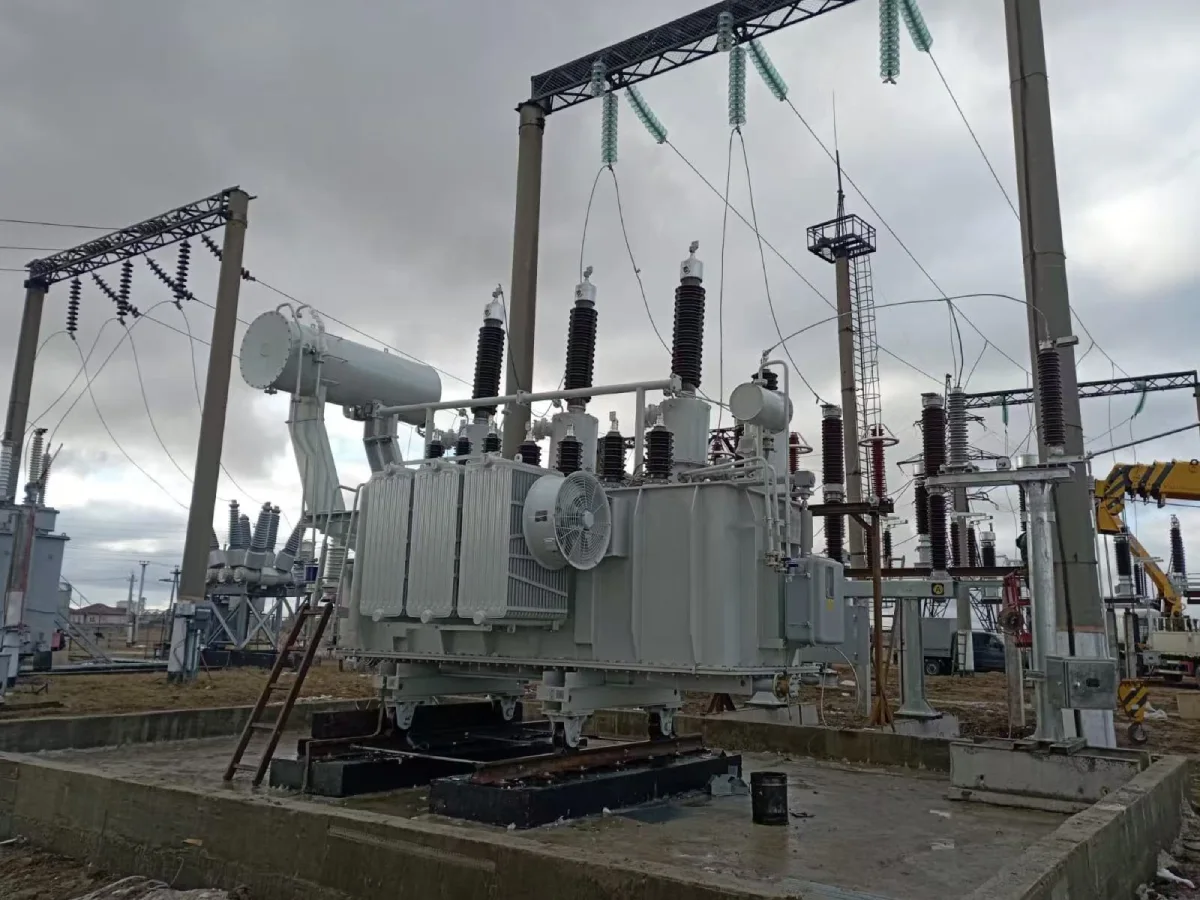
Kazakhstan-6300KVA-110/35/10kV
substation

An electrical Substation is a high-voltage electric system facility used to transform voltage from high to low, or the reverse, and to perform other important functions such as switching, protection, and control of the power system. It is a complex assembly of electrical equipment, including transformers, circuit breakers, disconnect switches, busbars, and protective relays, acting as the essential link between power generation, transmission lines, and end-users.

Key Components of a Substation

A modern substation is an intricate network of specialized equipment, each serving a vital role in power management and safety:

1.Power Transformers: The core of the substation, responsible for changing the voltage level via electromagnetic induction.

2.Circuit Breakers (CBs): High-voltage switching devices designed to interrupt fault currents (short circuits, overloads) safely and rapidly, protecting the system from damage.

3.Disconnect Switches (Isolators): Used to physically isolate a section of the circuit for maintenance. They operate only when the circuit breaker has already opened the circuit (no-load condition).
4.Busbars: Conductors that collect electric power from incoming feeders and distribute it to outgoing feeders. Common configurations include single bus, double bus, and ring bus schemes.
5.Instrument Transformers (CTs & PTs): Current Transformers (CTs) and Potential Transformers (PTs) scale down high voltages and currents to safe, measurable levels for metering, control, and protective relaying.
6.Lightning Arresters (Surge Arresters): Protective devices that divert high-voltage surges (from lightning or switching operations) to the ground, safeguarding expensive equipment like transformers.
7.Protective Relays: Intelligent devices that sense abnormal conditions (faults) and issue a trip command to the circuit breakers.
substation

Different Types of Substations by Voltage Level

Substations are primarily classified by the voltage levels they handle, reflecting their position within the overall power grid hierarchy:
Voltage Classification Typical Voltage Range Primary Function in the Grid
Ultra-High Voltage (UHV) 1000kV AC / ±800kV DC and above Long-distance, bulk power transmission; backbone of the national grid.
Super High Voltage (SHV) 500kV / 330kV Regional grid main arteries; connecting large power plants to the main grid.
High Voltage (HV) 220kV / 110kV / 66kV Sub-transmission and primary distribution networks; supplying major cities and industrial zones.
Medium Voltage (MV) 35kV / 22kV / 15kV / 10kV / 6kV Local distribution networks; feeding large commercial and industrial customers.
Low Voltage (LV) 0.4kV / 0.2kV Final step-down for end-user consumption (residential, small commercial).
substation

2. How Do Substations Work?

The operation of a substation is a continuous, dynamic process centered on the principle of electromagnetic induction within the power transformer.

The Substation Operational Flow

1.Power Reception: High-voltage power is received from the transmission lines into the substation yard.
2.Voltage Transformation: The incoming power is fed into the primary winding of the power transformer. Based on the turns ratio between the primary and secondary windings, the voltage is either stepped up (at the generating station) or, more commonly, stepped down (at transmission and distribution points).
3.Switching and Isolation: The power then passes through busbars, which act as collection and distribution points. Circuit breakers and disconnect switches are strategically placed to route power, isolate faulty sections, and facilitate maintenance without disrupting the entire grid.
4.Protection and Control: Instrument transformers constantly monitor the system’s voltage and current. These measurements are fed to the protective relays. If a fault (e.g., short circuit, overcurrent) is detected, the relay instantly sends a trip signal to the corresponding circuit breaker, isolating the fault in milliseconds.
5.Power Delivery: The transformed and regulated power is then distributed via outgoing feeders to the next stage of the grid or directly to the end-users.
This intricate process ensures that power is delivered at the correct voltage, with maximum reliability, and with immediate protection against system anomalies.

3. How Many Types of Outdoor Substations Are There?

Outdoor substations, where the majority of the primary equipment is installed in the open air, are common due to their lower construction costs and ease of expansion. They are broadly categorized by their physical structure and installation method:

Pole-Mounted Substation

Description: This is the simplest and most cost-effective type, typically found in rural or less densely populated areas. The transformer, along with necessary protective and switching gear (fuses, lightning arresters), is mounted directly on utility poles or a small H-frame structure.
Application: Used for the final step-down from medium voltage (e.g., 11kV or 33kV) to low voltage (e.g., 400V) for small groups of residential or agricultural consumers.
Capacity: Generally low capacity, ranging from 25 kVA to 315 kVA.

Foundation Mounted Substation (Open-Type)

Description: Also known as an open-type or conventional substation. The equipment (large transformers, circuit breakers, busbars) is mounted on concrete foundations at ground level. The conductors are suspended by insulators on steel structures or gantries.
Application: Used for high and extra-high voltage transmission and sub-transmission substations where large clearances are required, and land availability is not a major constraint.
Advantages: High capacity, easy maintenance access, and flexibility for future expansion.

Advanced Outdoor Substation Types

Beyond the physical mounting, modern outdoor substations are often defined by their insulation medium:
Air-Insulated Substations (AIS): The traditional type, using air as the primary insulating medium between live parts. Requires large physical separation (clearances) between equipment, leading to a large footprint.
Gas-Insulated Substations (GIS): A compact alternative where all live parts are enclosed in grounded metal casings and insulated by Sulfur Hexafluoride ($\text{SF}_6$) gas. GIS substations drastically reduce the required land area (up to 90% less than AIS) and are ideal for urban centers or indoor installations.

4. What is the Purpose of a Substation?

The fundamental purpose of a substation is multi-faceted, serving as the control center for power flow:
1.Voltage Transformation: To efficiently step up voltage for long-distance transmission (minimizing $I^2R$ losses) and step down voltage for safe distribution to consumers.
2.Power Switching and Routing: To connect or disconnect lines, transformers, and other equipment, allowing for flexible power routing, load balancing, and isolating faulty sections.
3.System Protection: To rapidly detect and isolate faults (short circuits, ground faults) using protective relays and circuit breakers, preventing catastrophic damage to expensive equipment and maintaining the stability of the remaining grid.
4.Frequency and Voltage Control: To regulate voltage levels through transformer tap changers and manage reactive power using capacitor banks or reactors, ensuring the quality of the power supply meets strict standards.
uniform sexualization market

5. Which Type of Transformer is Used in a Substation?

Substations primarily utilize Power Transformers and Distribution Transformers, depending on their function within the grid.
Power Transformers: Used in transmission and sub-transmission substations (HV and SHV). They are designed for continuous operation at full load, focusing on high efficiency and reliability. Their capacity ranges from tens of MVA to hundreds of MVA.
Distribution Transformers: Used in distribution substations (MV and LV). They are designed for varying load conditions and are typically smaller in capacity (from a few kVA to a few MVA).
Both types are predominantly Three-Phase Transformers to handle the three-phase AC power system. They are often Oil-Immersed (using mineral oil for cooling and insulation) or, for indoor applications, Dry-Type (using air or solid insulation).
Kerun Intelligent Control specializes in intelligent monitoring and control systems for these critical assets, providing advanced diagnostics to predict failures and optimize transformer performance.

6. Types of Distribution Substations

Distribution substations are the final link in the high-voltage chain, bringing power down to a usable level for end-users. They can be classified by their physical design:
1.Conventional Distribution Substation: Similar to the open-type, but operating at lower voltages (e.g., 33kV/11kV). They require a dedicated plot of land.
2.Pad-Mounted Substation (Kiosk Substation): A compact, tamper-proof, and aesthetically pleasing enclosure containing the transformer, switches, and protective gear. These are commonly used in residential and commercial areas where safety and appearance are concerns, with connections made via underground cables.
3.Unit Substation (Package Substation): A fully assembled, metal-enclosed unit comprising a high-voltage switchgear section, a transformer section, and a low-voltage switchgear section. They are factory-built and ready for installation, often used in large industrial plants or commercial buildings.
4.Underground Substation: Built entirely below ground level, typically in densely populated urban centers where land is scarce and visual impact must be minimized. These require specialized ventilation and fire suppression systems.

7. What’s the Difference Between a Step-up Substation and a Step-down Substation?

The distinction lies solely in the function of the power transformer within the substation:
Feature Step-up Substation Step-down Substation
Primary Function Increases voltage from generation level to transmission level. Decreases voltage from transmission/sub-transmission level to distribution level.
Typical Location Immediately adjacent to the power generating station (e.g., power plant). Near load centers (cities, industrial parks, large consumers).
Transformer Winding Secondary winding has more turns than the primary winding. Primary winding has more turns than the secondary winding.
Grid Role Initiates the long-distance transmission process. Terminates the transmission process and begins local distribution.
uniform sexualization market

8. What’s the Ideal Voltage for a Substation?

The “ideal voltage” for a substation is not a single value but a carefully calculated economic and technical optimum determined by its specific role in the grid:

  • Transmission Voltage: The optimal transmission voltage is the highest level that is technically feasible and economically justified for the distance and power being transmitted. Using a higher voltage reduces the current (I) required for a given power (P), which in turn reduces power loss
    loss ∝ I2.For long-distance bulk power transfers, such as intercontinental or national grids, ultra-high voltage (UHV) systems—typically around 1000 kV—are considered ideal.
  • Distribution Voltage: The ideal is the lowest voltage that can reliably and economically serve the local load area without excessive voltage drop. This balances the cost of conductors and equipment insulation against the need to minimize local losses. Typical MV distribution voltages (10kV, 22kV, 35kV) are considered ideal for urban and suburban distribution.

9. What’s the Typical Rating for a Step-down Transformer Used in a Substation?

The rating of a step-down transformer is expressed in kVA (kilo-Volt-Amperes) or MVA (Mega-Volt-Amperes) and is determined by the maximum anticipated load it must serve, plus a safety margin.
Substation TypeTypical Transformer Rating Range
Transmission Substation (HV/SHV)50 MVA to 500 MVA
Primary Distribution Substation (MV)5 MVA to 50 MVA
Secondary Distribution (Pad-Mounted)50 kVA to 2,500 kVA (2.5 MVA)

The transformer is typically sized to operate most efficiently (highest efficiency point) between 75% and 90% of its rated capacity.

10. What’s the Difference Between a Transmission Substation and a Distribution Substation?

This is a crucial distinction based on function and voltage:
Transmission Substation: Operates at high and super-high voltages (110kV to 500kV+). Its primary role is to link different transmission lines, step down the voltage to a sub-transmission level (e.g., 500kV to 220kV), and ensure the bulk transfer of power across large geographical areas. It focuses on system stability and bulk power transfer.
Distribution Substation: Operates at medium voltages (35kV down to 400V). Its primary role is to take power from the sub-transmission network and step it down to a final distribution voltage (e.g., 35kV to 10kV, and finally to 0.4kV). It focuses on load delivery and service reliability to end-users.
uniform sexualization market

11. How Many Amps Can a Single-Phase Transformer Handle?

The maximum current (Amps) a single-phase transformer can safely handle is its Rated Current or Full Load Amps (FLA). This value is directly calculated from its kVA rating and its rated voltage, based on the fundamental power formula:
Single-Phase Power (S) = Voltage (V) × Current (I)
Therefore, the Rated Current ($I$) is calculated as:
Rated Current (Amps) = (kVA Rating × 1000) / Rated Voltage (Volts)
Example Calculation: For a single-phase transformer rated at 25 kVA with a secondary voltage of 240 V:
I_Rated = (25 kVA × 1000) / 240 V ≈ 104.17 Amps
The transformer can safely handle approximately 104.17 Amps of continuous current on its secondary side. This calculation is vital for selecting appropriate protective devices (fuses and circuit breakers) and sizing the connecting cables.

12. Why Are Transformers so Important To the Electrical Grid?

Transformers are the single most important component enabling the modern electrical grid. Their importance stems from the fundamental economic and physical realities of electricity transmission:
1.Economic Transmission: Without the ability to step up voltage, power would have to be transmitted at generation voltage (typically 10-25kV). This would result in massive current flow and prohibitively high $I^2R$ losses, making long-distance power transmission economically unfeasible. Transformers allow power to be transmitted at UHV/SHV, minimizing losses and the cost of conductor material.
2.Safety and Usability: Conversely, without the ability to step down voltage, the high transmission voltage would be too dangerous and impractical for residential and commercial use. Transformers ensure that power is delivered to the end-user at a safe and standardized voltage (e.g., 220V/120V).
3.Grid Interconnection: Transformers facilitate the interconnection of different voltage systems and regional grids, allowing for the flexible exchange of power and enhancing overall grid reliability and resilience.

Advanced Substation Protection and Control

The reliability of the entire grid hinges on the speed and accuracy of the substation’s protection system. Kerun Intelligent Control focuses on this critical area.

Substation Protection Relays

Protective relays are the “brains” of the substation, constantly monitoring electrical parameters and acting instantly to clear faults. Key types include:
Overcurrent Relays (50/51): The most common type. They trip when the current exceeds a predetermined value (instantaneous or time-delayed).
Differential Relays (87): Provide high-speed, sensitive protection for critical assets like transformers and busbars. They compare the current entering and leaving a protected zone; any difference indicates an internal fault.
Distance Relays (21): Primarily used for transmission line protection. They measure the impedance (a function of distance) to the fault and trip if the fault is within a predefined zone.
Over/Under Voltage Relays (27/59): Protect equipment from damage due to abnormal voltage conditions.

The Role of Intelligent Control

Modern substations are increasingly automated. Intelligent Electronic Devices (IEDs) and Supervisory Control and Data Acquisition (SCADA) systems, which are core to Kerun Intelligent Control‘s offerings, enable:
Remote Monitoring and Operation: Operators can monitor and control the substation from a central control room, improving response time.
Fault Analysis: Detailed fault records allow engineers to analyze events and improve system performance.
Predictive Maintenance: Continuous monitoring of transformer temperature, oil quality, and partial discharge allows for the prediction of equipment failure, moving from reactive to proactive maintenance strategies.
uniform sexualization market

Frequently Asked Questions (FAQ)

1. What are the primary differences in design and application between Air-Insulated Substations (AIS) and Gas-Insulated Substations (GIS)?

AIS and GIS mainly differ in what they use for insulation and how much space they need. AIS uses regular air for insulation, so it needs large clearances to avoid flashovers. Because of that, AIS takes up a lot of outdoor space, but it also makes maintenance and visual inspection much easier.

GIS, on the other hand, packs all major equipment—like busbars, breakers, and disconnectors—inside grounded metal enclosures filled with pressurized SF₆ gas, which offers much stronger insulation than air. This setup shrinks the required footprint by up to 90%, which is why GIS works best in cities, indoor sites, or places with tight space or environmental limits. Although GIS costs more upfront and needs specialized maintenance, its compact size, protection from the environment, and overall safety make it the better choice in dense areas.

2. How does the protective relaying system in a substation ensure the stability and safety of the entire electrical grid?

The protective relaying system serves as the substation’s main safety layer by spotting faults quickly and isolating only the part of the grid that’s affected. This lets the rest of the system keep running normally. It does this through a coordinated setup of relays and circuit breakers.

For example, a differential relay (87) protects a transformer by comparing the input and output currents; if they don’t match, it trips the breakers immediately. This fast action—often in just milliseconds—prevents faults from spreading, protects expensive equipment, and keeps the overall grid stable. Without this kind of fast and selective protection, one small fault could easily lead to a major outage.

3. In the context of distribution, what are the specific advantages of using a Pad-Mounted Substation over a conventional Pole-Mounted Substation for urban and commercial areas?

Pad-Mounted Substations come with several key advantages over Pole-Mounted Substations, especially in cities, commercial sites, and newer residential areas. For one, they boost safety and look much cleaner. A Pad-Mounted unit sits in a sealed, grounded, tamper-proof cabinet at ground level, which makes it far safer in public spaces than exposed equipment mounted on poles. It also blends in better and often meets local zoning requirements more easily.

From a technical perspective, Pad-Mounted units use underground cables, which remove overhead lines and reduce weather-related outages. They also feature compartmentalized and dead-front designs that make maintenance work safer. While Pole-Mounted units still fit low-density rural areas due to their lower cost, Pad-Mounted Substations offer a safer, more reliable option for modern, high-density environments.