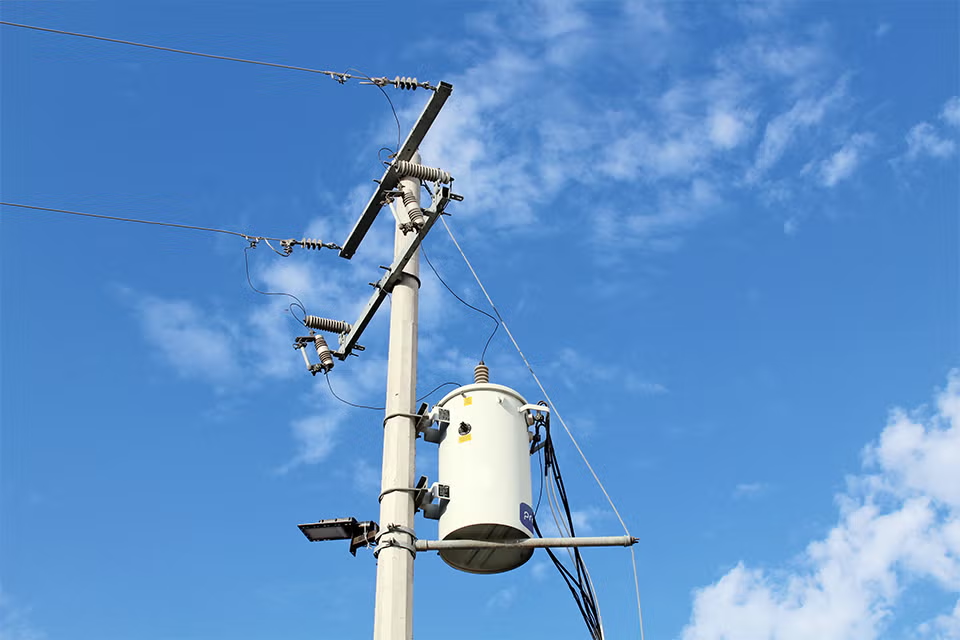
How To Choose Single Phase Pole Mounted Transformer?
-
Single phase pole mounted transformer for utility distribution: efficiency, insulation, load capacity, compliance standards.
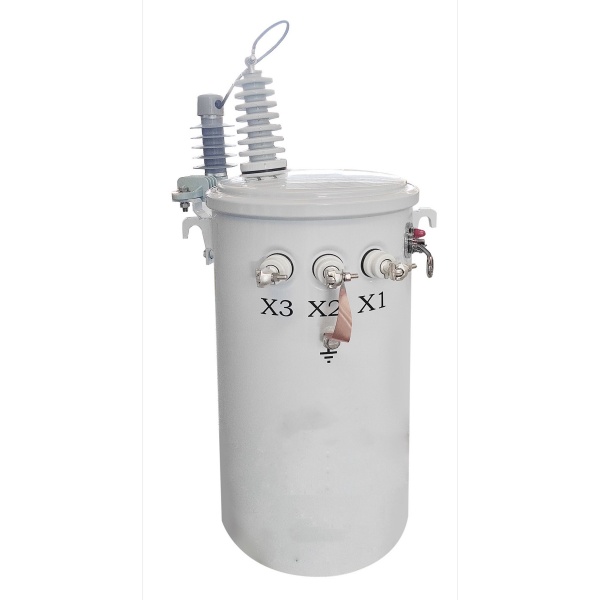
Single phase pole mounted transformer plays a vital role in modern electrical distribution systems across urban and rural networks. It ensures stable voltage conversion from medium voltage lines to usable low voltage supply for end users. Engineers evaluate electrical demand patterns before selecting suitable units for specific applications. Proper configuration improves grid stability and reduces energy losses in long distance transmission. Environmental conditions such as temperature variation and humidity levels directly affect performance reliability. Load forecasting becomes essential for long term operational planning. Utility companies also consider installation height and pole strength during deployment. Mechanical safety and insulation durability influence service lifespan significantly. System designers prioritize efficiency and cost effectiveness during selection. Accurate specification reduces maintenance frequency and operational risks in field conditions.
Single Phase Pole Mounted Transformer Application Overview in Power Systems
Single phase pole mounted transformer is widely applied in distribution networks where compact and flexible installation is required. It supports efficient voltage reduction for residential and small commercial users in distributed areas. Utilities deploy it in regions where underground systems are not feasible due to cost or terrain limitations. A 10 kv oil-immersed transformer is often used in compact feeder systems requiring stable voltage control. Engineers assess load variation patterns before final installation decisions. Grid expansion projects rely on pole mounted solutions for rapid deployment. Environmental resistance plays an important role in outdoor applications. Proper insulation ensures stable operation under fluctuating weather conditions. Maintenance accessibility improves long term service efficiency. Strategic placement along distribution lines enhances power reliability and reduces outage risks across communities.
Technical Parameters for Single Phase Pole Mounted Transformer Performance
Selection of single phase pole mounted transformer depends heavily on technical parameters that define operational efficiency and system compatibility. Rated capacity must align with expected load demand to avoid overload or underutilization. Voltage ratio compatibility ensures smooth integration into existing distribution infrastructure. Efficiency levels determine energy loss during transformation processes and influence operational cost. Mechanical strength supports stable operation under external stress conditions such as wind and vibration. Thermal performance directly impacts long term reliability under continuous load.
| Parameter | Typical Range | Operational Impact |
|---|---|---|
| Rated Capacity | 5–250 kVA | Defines load handling ability |
| Voltage Class | 11–33 kV | Ensures grid compatibility |
| Efficiency | 95%–99% | Controls energy losses |
Accurate parameter selection improves system stability and reduces operational risk in long term grid operation scenarios.
Core Structural Design and Material Engineering in Transformer Systems
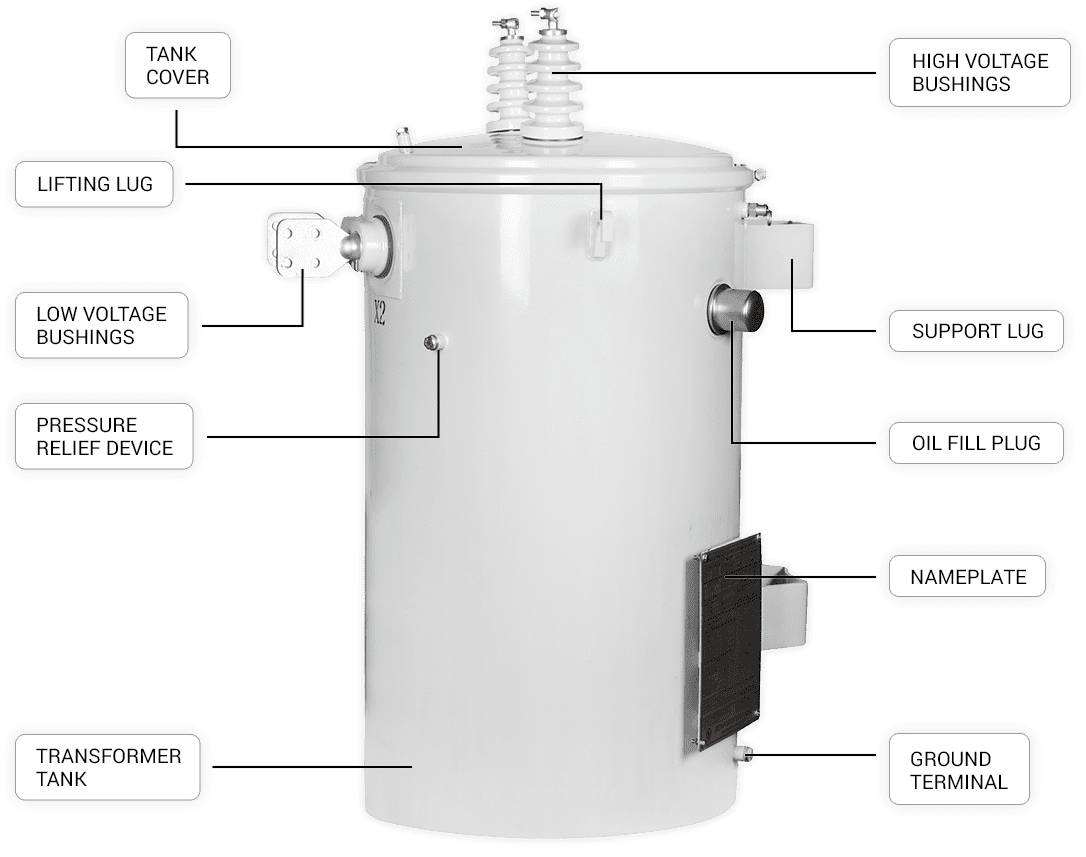
Core engineering determines how effectively a single phase pole mounted transformer converts electrical energy with minimal losses. Silicon steel cores reduce magnetic hysteresis and improve efficiency during continuous operation. Copper windings provide high conductivity and lower resistance compared to alternative materials. Insulation systems prevent electrical breakdown under high voltage stress conditions. Mechanical housing protects internal components from environmental exposure and physical impact. Cooling oil circulation enhances heat dissipation and stabilizes internal temperature. Structural reinforcement ensures stability during pole mounted installation. Corrosion resistant coatings extend equipment lifespan in humid environments.
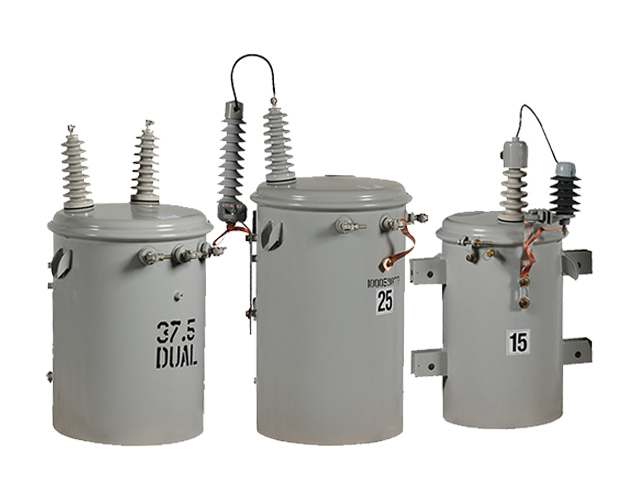
Proper alignment of core and winding systems reduces vibration and noise levels. Quality control during manufacturing ensures consistent performance standards across production batches.
Installation Environment Requirements for Single Phase Pole Mounted Transformer
Single phase pole mounted transformer installation requires careful evaluation of environmental and mechanical conditions. Pole strength must support equipment weight and dynamic loads during operation. Wind pressure and vibration forces must be considered during structural design. Clearance distance ensures public safety and prevents accidental contact with live components. Grounding systems protect against fault currents and electrical hazards. In colder climates, oil viscosity affects heat transfer efficiency and operational stability. Moisture protection systems prevent insulation degradation over time.
A 35 kv oil-immersed transformer is typically used in higher capacity distribution systems requiring stronger insulation performance. Vegetation control around installation sites reduces safety risks. Hardware fittings must resist corrosion and mechanical stress. Proper alignment ensures balanced load distribution on supporting structures. Environmental assessment plays a key role in installation planning for long term reliability.
Compliance Standards and Electrical Safety Certification
Compliance requirements for a single phase pole mounted transformer ensure safe and reliable operation in electrical distribution networks. IEC 60076 defines construction and performance requirements for power transformers, IEC 60071 specifies insulation coordination levels and rated withstand voltages for system protection, and IEC 60529 addresses protection against dust and water ingress for outdoor enclosures. ANSI IEEE C57.12.00 sets general requirements for liquid-immersed distribution transformers in utility grids, and IEEE C57.12.20 defines detailed construction and performance criteria for pole mounted units. IEEE C57.91 loading limits and temperature rise guidelines during operation. Testing includes lightning impulse tests, applied voltage tests, and insulation resistance checks, while surge protection devices mitigate lightning and switching surge risks; grounding, certification, and risk assessment improve operational reliability.
Lifecycle Maintenance and Cost Management in Transformer Operation
Lifecycle management of single phase pole mounted transformer focuses on reducing operational cost while maintaining high reliability. Routine inspections identify insulation aging and mechanical wear at early stages. Oil quality testing ensures dielectric strength remains within acceptable limits. Thermal imaging detects abnormal heat buildup in critical components. Predictive maintenance systems improve equipment availability and reduce unexpected failures. Spare parts planning ensures quick recovery during breakdown events.
| Maintenance Type | Interval | Purpose |
|---|---|---|
| Visual Inspection | 6 Months | Detect physical damage |
| Oil Analysis | 12 Months | Check insulation quality |
| Thermal Scan | Annually | Identify overheating |
Maintenance planning directly improves system reliability and reduces long term operational expenditure across distribution networks.
Operational Efficiency Optimization in Distribution Networks
Improving efficiency of single phase pole mounted transformer requires advanced monitoring and system optimization techniques. Load balancing reduces stress on individual units and improves voltage stability. Power factor correction minimizes reactive power losses in distribution lines. Smart monitoring systems provide real time performance data for operational decision making. Automated control systems reduce manual intervention and improve response time during faults. Energy loss reduction strategies enhance overall grid efficiency. Predictive analytics support long term infrastructure planning. Continuous performance monitoring ensures stable operation under varying load conditions. System upgrades improve resilience and reliability in modern power networks. Intelligent grid integration enhances distribution performance across large scale systems.
FAQ
What factors affect single phase pole mounted transformer efficiency?
Efficiency of single phase pole mounted transformer depends on core material quality, winding resistance, and load conditions. Higher quality silicon steel reduces magnetic losses during operation. Copper windings improve conductivity and reduce heat generation. Load imbalance increases energy loss and reduces efficiency levels. Environmental temperature also affects thermal performance significantly. Proper cooling systems maintain stable internal conditions. Voltage fluctuations create additional stress on insulation systems. Maintenance quality influences long term performance stability. Regular inspection ensures early detection of efficiency decline. Modern monitoring systems help optimize operational performance. Proper installation techniques reduce mechanical stress. System design choices directly influence energy utilization efficiency in distribution networks.
How often should maintenance be performed?
Maintenance scheduling for single phase pole mounted transformer depends on operational load and environmental conditions. Most utility systems follow semi annual inspection cycles for basic checks. Oil analysis is typically conducted once every year to evaluate insulation quality. Thermal imaging helps identify hidden overheating issues before failure occurs. Visual inspection detects corrosion, leakage, or structural damage. High humidity or coastal environments may require more frequent maintenance. Load intensity also affects inspection intervals significantly. Predictive maintenance systems allow condition based servicing instead of fixed schedules. Spare parts availability influences repair timing. Proper maintenance planning improves system reliability and reduces unexpected downtime in distribution networks.