
How Size Three Phase Pad Mounted Transformers For Your Load?
-
Three phase pad mounted transformers sizing for industrial loads, capacity planning, efficiency and installation factors.
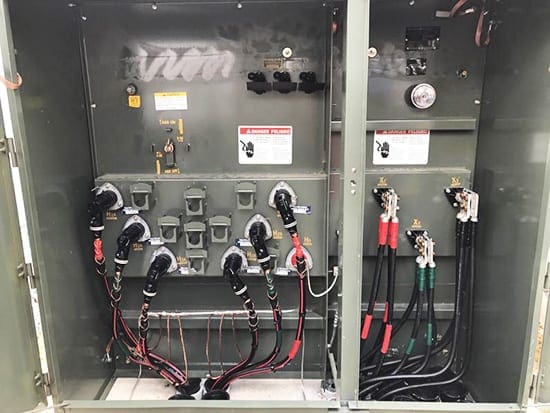
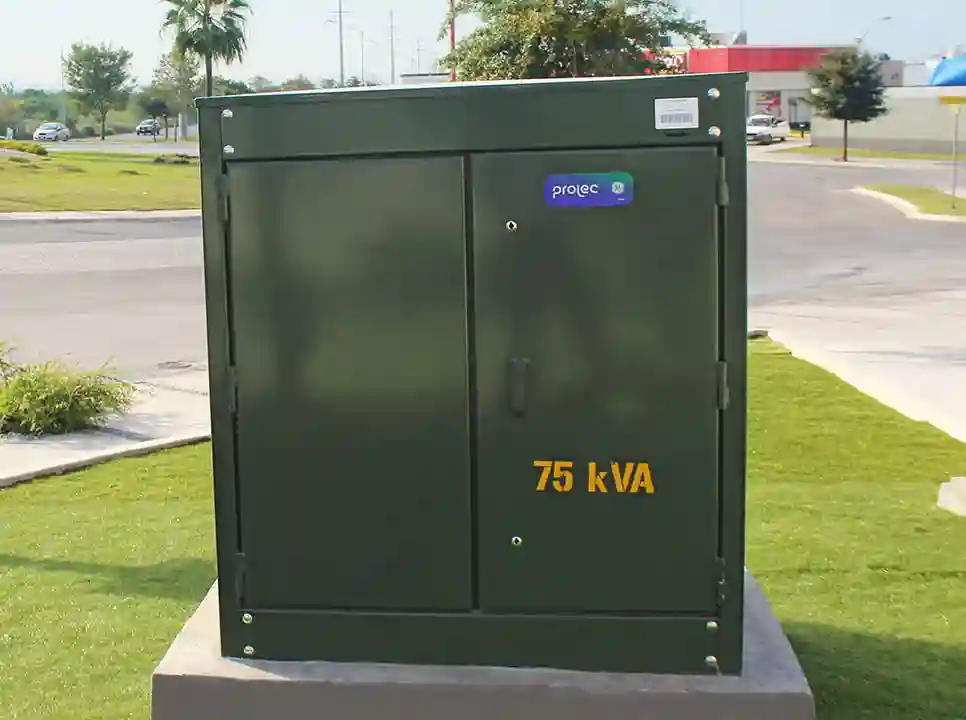
Industrial power networks require precise capacity planning for stable distribution. Three phase pad mounted transformers support compact and safe outdoor installations across industrial sites. Engineers evaluate electrical demand before selecting equipment ratings. Load variations affect efficiency and long-term reliability in manufacturing systems. Proper sizing reduces overheating risks and improves voltage stability. Modern facilities depend on accurate load forecasting methods for electrical infrastructure design. Equipment selection also considers expansion potential for future production growth. Balanced phase distribution ensures consistent performance across all connected machinery. Incorrect sizing leads to energy losses and operational interruptions. Industrial operators prioritize safety and efficiency during system design stages. Accurate engineering assessment strengthens grid resilience in industrial environments.
Industrial load analysis for three phase pad mounted transformers
Engineers perform detailed load studies before selecting three phase pad mounted transformers for industrial applications. They measure total connected load and evaluate operational patterns.Peak demand often differs significantly from average consumption levels. Load diversity factors help reduce overestimation in system design. Industrial plants operate multiple machines with staggered usage cycles. This variation improves efficiency when properly analyzed. Power distribution engineers also consider motor starting currents during calculations. These surges influence transformer capacity requirements significantly. Accurate data collection improves system reliability and reduces maintenance costs. Environmental conditions such as temperature and ventilation affect performance outcomes. Electrical planners integrate safety margins to support unexpected load growth. System modeling tools assist in predicting future energy demand trends. Proper evaluation ensures stable operation across all industrial zones.
Three phase pad mounted transformers capacity and kVA selection
Transformer capacity selection depends on calculated load demand and operational safety margins. Three phase pad mounted transformers require correct kVA rating to maintain stable voltage output. Engineers compare continuous load with peak demand before finalizing equipment specifications. Undersized units increase thermal stress and reduce service life. Oversized systems raise capital costs and reduce efficiency. Standard industrial ratings help streamline procurement decisions across projects. Electrical designers also evaluate short circuit withstand capacity during selection. Protection coordination ensures safe operation under fault conditions. A 10 kv oil-immersed transformer often serves as a reference point in medium voltage distribution systems. Its performance characteristics guide comparative design decisions in industrial planning. Future expansion planning remains critical during early sizing stages. Engineers include buffer capacity to support production scaling without major redesign. Accurate selection improves operational continuity and reduces downtime risks.
Voltage regulation and thermal performance in transformer sizing
Voltage regulation plays a critical role in industrial transformer performance. Three phase pad mounted transformers maintain stable output under fluctuating load conditions. Voltage drops occur when demand exceeds design thresholds. Engineers mitigate these issues through proper impedance selection. Thermal performance directly influences equipment lifespan and reliability. Heat buildup results from copper and core losses during operation. Cooling design helps dissipate excess heat effectively. Ambient temperature variations affect insulation aging rates. Manufacturers specify maximum operating limits for safe deployment. Insulation systems use advanced materials to improve durability. Oil circulation improves heat transfer in larger units. Field engineers monitor temperature rise during peak operation cycles. Proper thermal management reduces failure risks and improves efficiency across electrical networks.
| Load Range (kW) | Recommended kVA | Application Type | Notes |
|---|---|---|---|
| 0–200 | 250–300 | Light manufacturing | Stable low surge demand |
| 200–800 | 500–1000 | Medium industrial plants | Moderate motor loads |
| 800–2000 | 1250–2500 | Heavy industry | High peak variation |
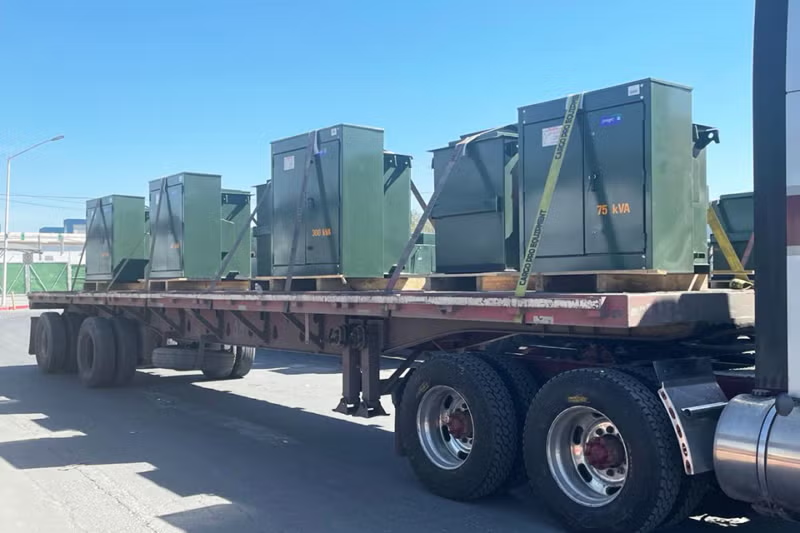
Load classification plays a key role in electrical system planning. Engineers match demand ranges with standardized transformer capacities. Industrial facilities often experience fluctuating consumption patterns across production cycles. Proper mapping reduces oversizing risks and improves cost efficiency. Electrical designers also account for future expansion when selecting capacity ranges. Safety margins ensure stable operation under unpredictable load spikes. Procurement teams use structured load tables to simplify decision workflows. This approach supports consistent performance across different industrial environments.
Installation environment and structural constraints for pad mounted systems
Installation conditions strongly influence transformer selection in industrial environments. Ground clearance and enclosure design ensure safe outdoor deployment. Three phase pad mounted transformers require proper spacing for maintenance access. Engineers evaluate soil stability before foundation design begins. Moisture exposure increases insulation stress if sealing design remains inadequate. Dust and chemical exposure also affect long-term equipment reliability. Ventilation pathways must support heat dissipation without obstruction. Cable routing design ensures safe connection to distribution networks. Security enclosures prevent unauthorized access in public industrial zones. Environmental impact assessments guide material selection for corrosion resistance. Proper installation planning improves operational lifespan and reduces maintenance frequency across utility systems.
Protection systems, efficiency optimization, and compliance standards
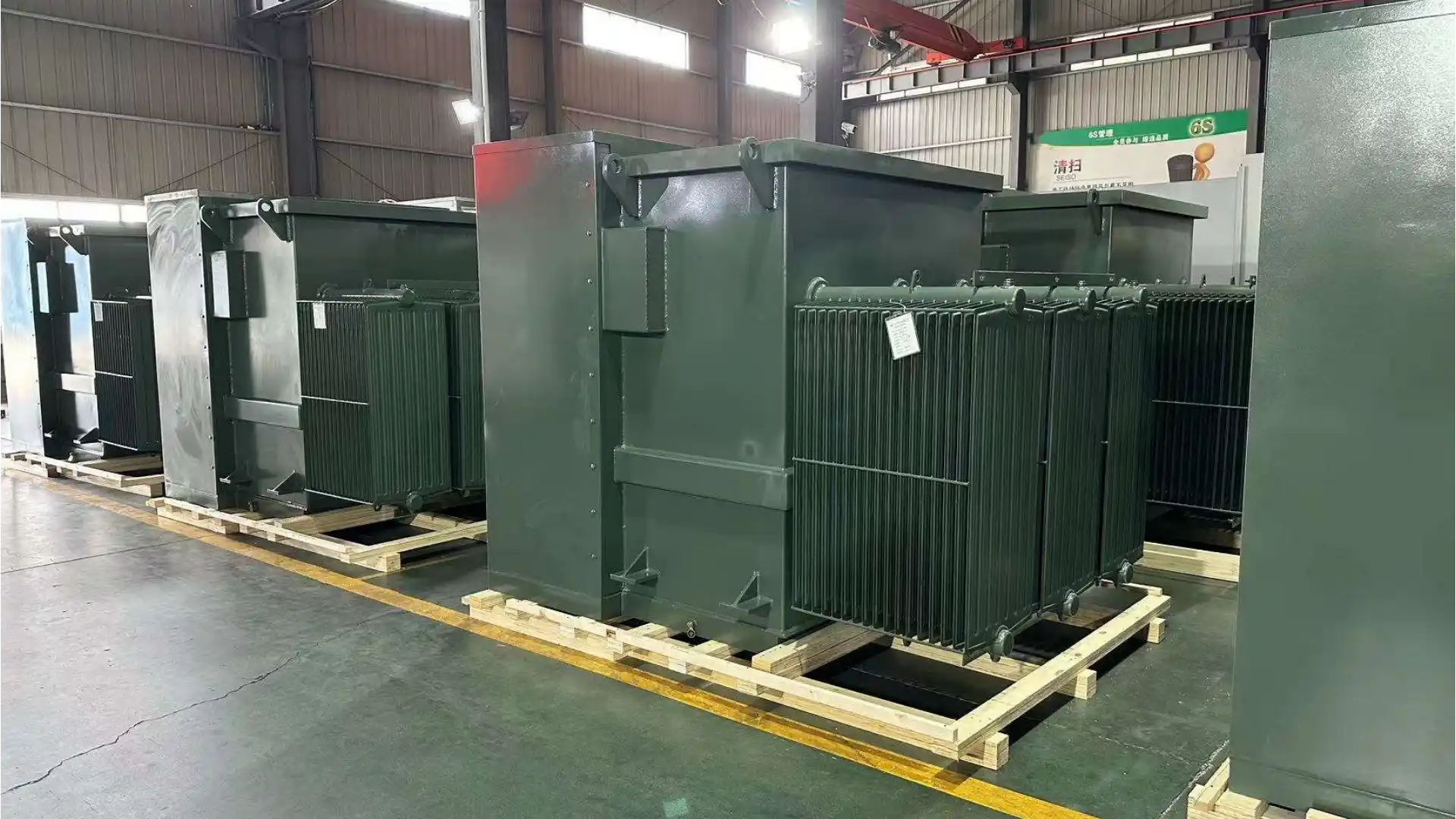
Electrical protection systems safeguard transformer operations under fault conditions. Circuit breakers, protective relays, and surge arresters isolate abnormal current rapidly. Three phase pad mounted transformers integrate multiple protection layers for operational safety. Efficiency optimization targets reduction of core and copper losses. Engineers evaluate loss profiles during design and testing stages. Compliance standards define strict manufacturing and operational requirements. IEC 60076 governs transformer design and testing requirements. IEEE C57 series and ANSI C57 specify performance and safety criteria. NEMA ST20 and UL 1561 define distribution transformer efficiency and safety requirements.
ISO 9001, ISO 14001, and ISO 45001 support quality, environmental, and occupational safety systems. NEC NFPA 70 and utility grid codes regulate installation practices. Digital monitoring systems track thermal and load behavior continuously. Predictive maintenance improves reliability and reduces unplanned outages. A 110 kv oil-immersed power transformer is commonly used in transmission substations for reference comparison.
FAQ
How do I determine the correct size for a three phase pad mounted transformers?
Correct sizing starts with total load calculation across all connected equipment. Engineers measure both continuous and peak consumption levels. They also include motor starting currents in the analysis. Safety margins help absorb unexpected demand increases. Load diversity factors reduce overestimation in system design. Electrical planners compare calculated demand with standard kVA ratings. Environmental conditions also influence final selection decisions. High temperature areas may require additional capacity allowances. Future expansion plans must also be included during evaluation. Proper coordination between design engineers ensures balanced phase loading. Accurate sizing improves efficiency and reduces operational risk across industrial electrical systems.
What happens if a transformer is undersized for the load demand?
An undersized transformer struggles to handle required electrical demand consistently. Excess load generates heat and accelerates insulation degradation. Voltage drops become more frequent under heavy operation conditions. Equipment connected to the system may experience unstable performance. Frequent overloads reduce transformer lifespan significantly. Maintenance costs increase due to repeated thermal stress events. Protection systems may trigger shutdowns more often. Production downtime becomes a serious operational risk in industrial environments. Energy losses also rise under continuous overload conditions. Engineers typically avoid this issue by applying conservative sizing margins. Proper load forecasting prevents undersizing issues and ensures stable long-term operation.
Can a pad mounted transformer handle future load expansion?
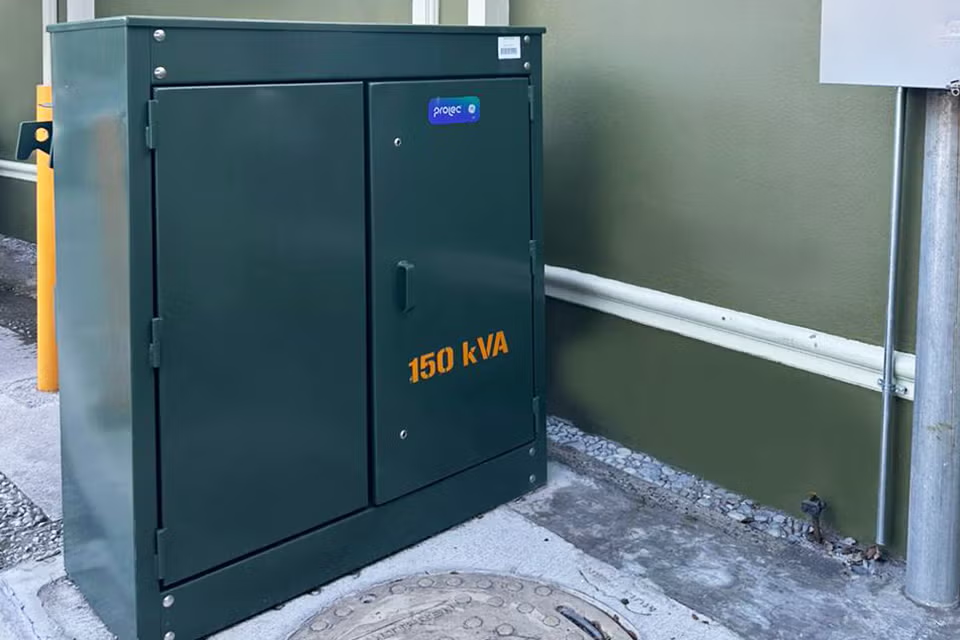
A pad mounted transformer can support future load growth when properly sized. Engineers often include expansion margins during initial design stages. Such margins account for additional machinery or new production lines. Three phase pad mounted transformers provide flexible capacity planning across industrial networks. Proper forecasting ensures that future demand stays within system limits. Electrical designers evaluate long-term production goals before final selection. Moderate oversizing improves adaptability without sacrificing efficiency. Excessive oversizing, however, increases both cost and energy losses. Balanced planning supports current performance while enabling scalable upgrades. Thoughtful engineering decisions maintain stable operation as industrial demand evolves.