
How does dry-type transformers work in simple terms?
-
Dry-type transformers transfer power using air and solid insulation, offering safe, low-maintenance performance for indoor and modern electrical systems.
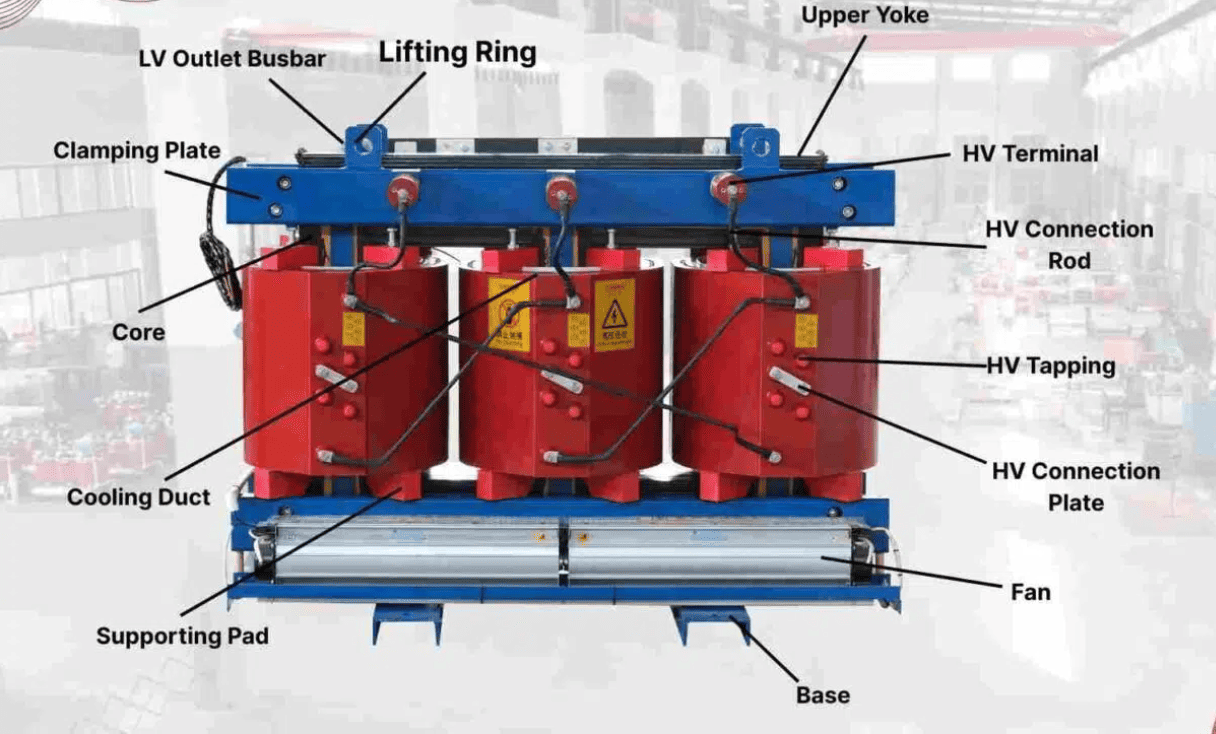
Dry-type transformers operate by transferring electrical energy through electromagnetic induction without using insulating oil, which makes them suitable for safety-sensitive environments. In simple terms, electrical current enters the primary winding and creates a magnetic field within the core. That magnetic field induces voltage in the secondary winding. Air, resin, or solid insulation replaces liquid oil, reducing fire risk while maintaining electrical isolation. This structure allows dry-type transformer to function reliably in buildings, factories, and infrastructure where safety and cleanliness matter.
What problem do dry-type transformers solve in power systems?
Power systems often face safety and environmental constraints, especially in indoor or populated locations. Oil-filled equipment introduces leakage and fire risks, which complicate approvals and maintenance. Dry-type transformers address this problem by eliminating oil entirely. Their insulation systems rely on resin casting or vacuum pressure impregnation. These systems resist moisture and thermal stress while avoiding oil management issues. As a result, operators gain simpler compliance and safer installation without sacrificing electrical performance.
Why does insulation design matter for dry-type transformer?
Insulation design directly affects reliability and lifespan. Dry-type transformers depend on solid insulation to withstand voltage stress and heat cycles. Resin-based systems encapsulate windings and protect conductors from dust and humidity. Air-cooled designs allow heat to dissipate naturally or with forced ventilation. This combination balances thermal control and dielectric strength. Strong insulation ensures stable operation under fluctuating loads while supporting long service intervals.
How do dry-type transformer actually work step by step?
The working process begins when alternating current flows through the primary winding. That current generates a changing magnetic field in the laminated core. The magnetic field then induces voltage in the secondary winding through electromagnetic coupling. Solid insulation prevents electrical contact between windings. Heat generated during operation dissipates through air paths and ventilation channels. Each step follows basic transformer physics while adapting materials for oil-free operation.
What makes dry-type transformers different from oil immersed units?
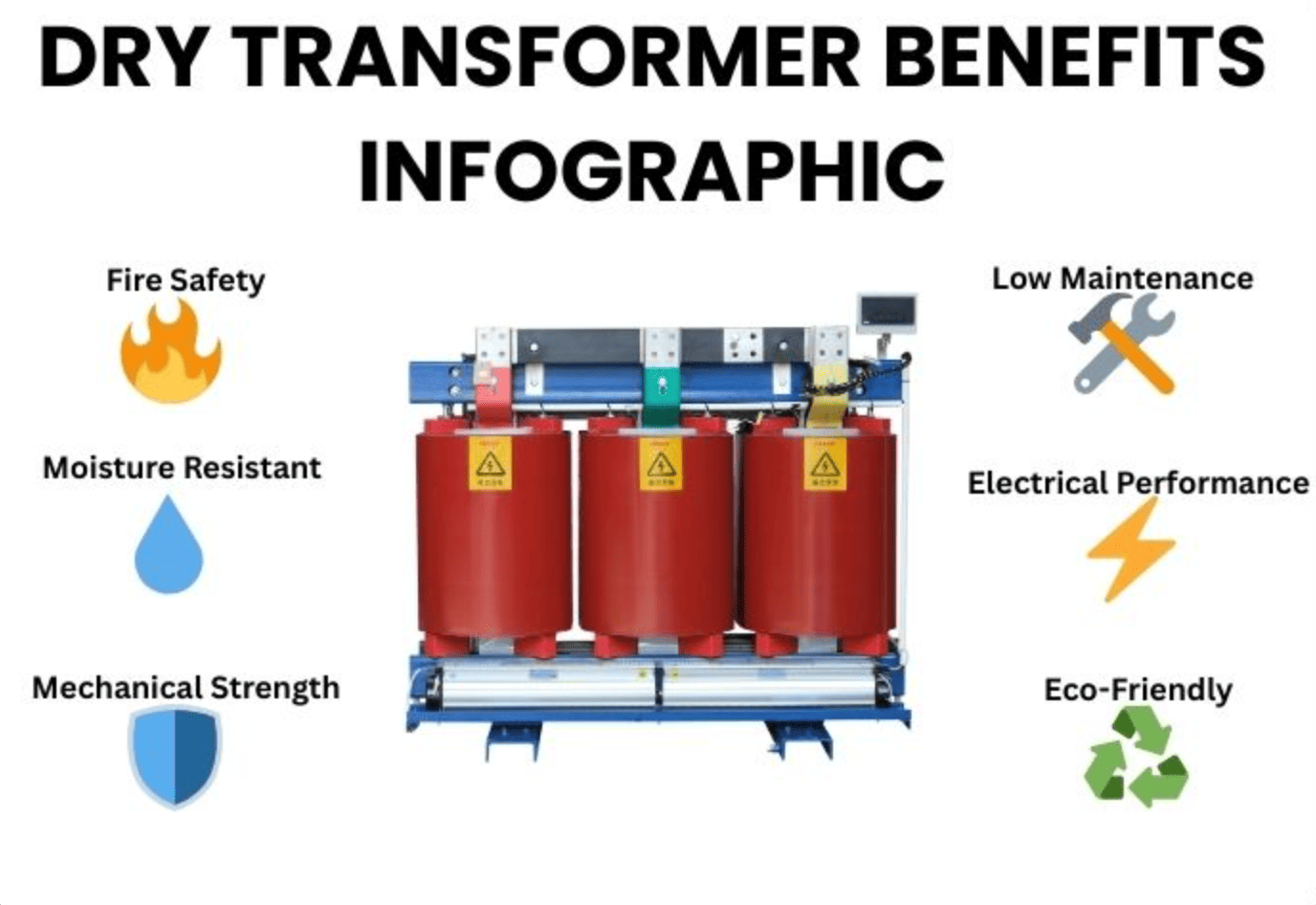
Dry-type transformer differ mainly in cooling and insulation methods. Oil immersed units use liquid oil for heat transfer and insulation. Dry-type transformers rely on air and solid materials instead. This difference affects installation options, safety profiles, and maintenance needs. Dry designs reduce fire hazards and environmental exposure. Oil units often handle higher capacities more efficiently. Choosing between them depends on location, load, and regulatory conditions.
Key reasons users choose dry-type transformer
Several practical reasons drive adoption of dry-type transformers.
-
Reduced fire and environmental risk
-
Easier indoor installation
-
Lower routine maintenance needs
-
Cleaner operation without oil handling
Why these reasons influence early decision stages
These reasons matter most during early evaluation. Project planners consider safety approvals, insurance requirements, and space constraints. Dry-type transformers simplify these considerations. Reduced maintenance lowers long-term operational burden. Cleaner designs align with sustainability goals. Together, these factors move users from awareness toward initial selection decisions.
Where are dry-type transformers commonly used?
Dry-type transformer appear in many applications where safety and accessibility matter.
-
Commercial buildings and malls
-
Hospitals and data centers
-
Industrial plants with indoor substations
-
Renewable energy facilitie
How application context shapes transformer choice
Each application imposes unique demands. Hospitals require fire-safe equipment near occupied spaces. Data centers need stable voltage with minimal contamination risk. Industrial plants value robust insulation against dust. Renewable sites prioritize low environmental impact. Dry-type transformers adapt well across these contexts, which explains their broad adoption.
Comparison of dry-type and oil immersed transformers
The table below highlights key differences.
| Aspect | Dry-Type Transformers | Oil Immersed Transformers |
|---|---|---|
| Insulation | Resin or solid | Mineral oil |
| Fire Risk | Low | Higher |
| Maintenance | Minimal | Oil monitoring |
| Typical Use | Indoor, public areas | Outdoor, high capacity |

How this comparison supports early understanding
This comparison clarifies trade-offs without technical overload. Dry-type transformer favor safety and convenience. Oil immersed units support higher power density. Understanding these differences helps readers align needs with technology. This clarity supports the transition from awareness toward structured evaluation.
How do dry-type transformers support future power needs?
Modern power systems demand flexibility and sustainability. Dry-type transformer support these goals through cleaner operation and adaptable designs. Improved materials enhance efficiency and thermal performance. Integration with monitoring systems improves reliability. As grids decentralize, dry-type solutions fit distributed installations. Their role continues to expand alongside renewable and urban infrastructure growth.
Why choose Kerun Intelligent Control?
Why choose Kerun Intelligent Control? Kerun Intelligent Control delivers dry-type transformers designed for safety-focused and performance-driven projects. Each unit reflects strict quality management and international standards. Engineering teams tailor solutions for commercial, industrial, and infrastructure needs. Reliable manufacturing and responsive support help projects progress smoothly. This approach builds confidence during both evaluation and selection stages.
FAQ
Are dry-type transformers suitable for all power capacities?
Dry-type transformer suit low to medium power ranges commonly used in buildings and industrial systems. Extremely high capacities often favor oil immersed designs due to cooling efficiency. Capacity selection depends on load profile, installation environment, and safety requirements. Evaluating these factors ensures appropriate application without overengineering.
Do dry-type transformer require special maintenance?
Dry-type transformers require limited maintenance compared to oil-based units. Periodic inspection focuses on ventilation paths, insulation condition, and connection integrity. Absence of oil eliminates sampling and leak checks. This simplicity reduces operational workload and improves reliability in controlled environments.
How long do dry-type transformer typically last?
Service life depends on insulation quality, load conditions, and thermal management. Well-designed dry-type transformer often operate for decades under proper conditions. Stable temperatures and clean environments extend lifespan. Selecting reputable manufacturers improves long-term performance consistency.